
The Sound of Home
Using Psychoacoustics to Create a Healthier Home
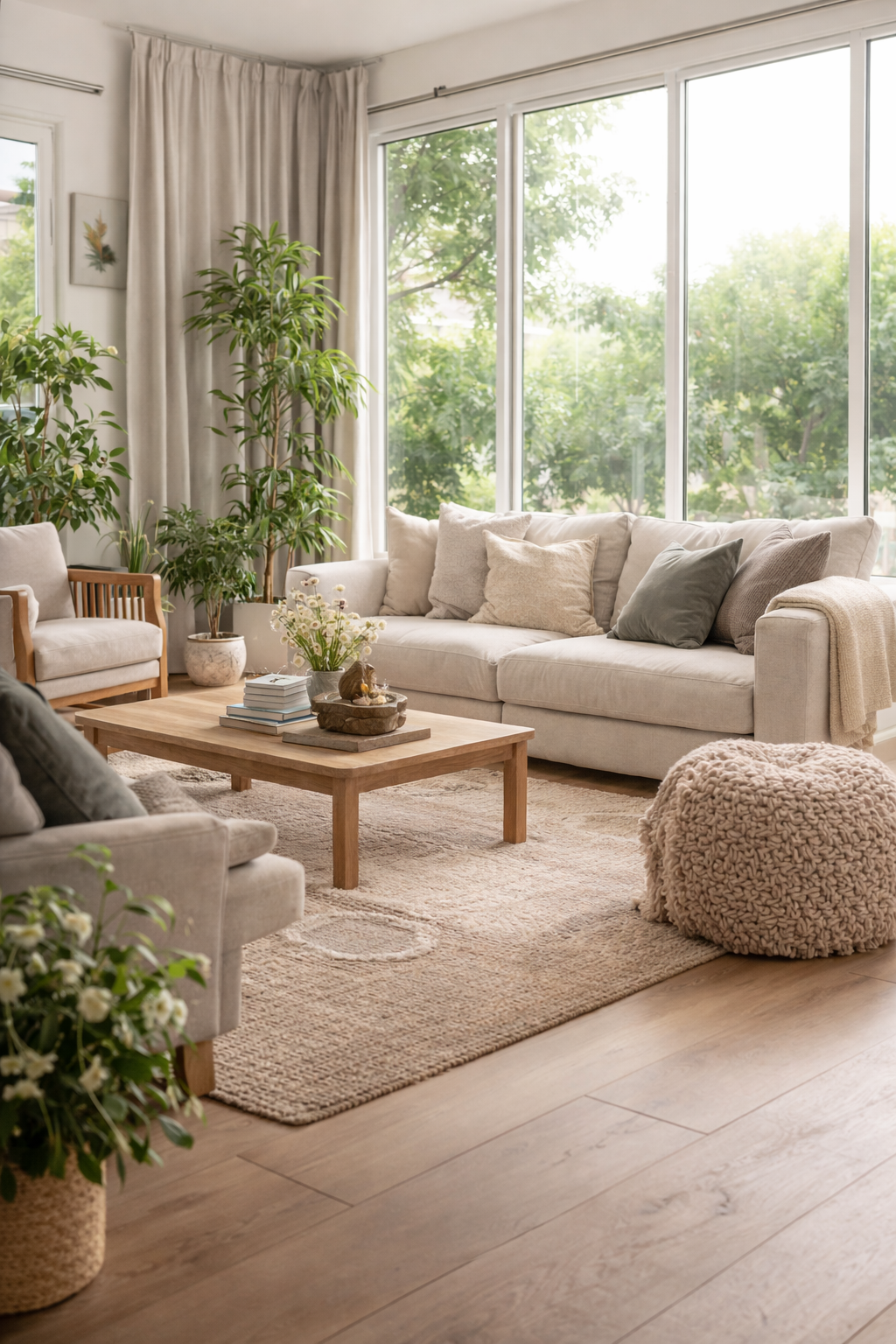
A room’s acoustic design can have a profound affect on human health and wellbeing.
Have you ever felt irritable, distracted, or unexpectedly drained while inside a room and found yourself yearning for a quieter, area where you could focus better or have a undisturbed thought?
We often think of wellness in a home or office as what we SEE: natural light, healthy materials, air quality, and biophilic design.
But there is another invisible layer shaping how we feel inside our homes and this is SOUND.
How the brain interprets sound.
A new emerging science in design is called psychoacoustics. Defined as the perception of sound and its physiological effects on our human brain. Our ears don’t hear - they transduce physical vibrations into neural signals, then our brain interprets them. Two people in the same room can experience different acoustic realities based on position, ear shape, and past experience. Psychoacoustics is one of the most overlooked, yet profoundly impactful, factors in healthy home design.
What is Psychoacoustics?
Psychoacoustics is the study of how humans perceive sound, not just how sound physically measures.
Two rooms can measure the same decibel level, yet one type of sound can feel calm and the other stressful.
Why?
Because the brain does not register sound the way a microphone does, it filters incoming noise through memory, biology, and deep survival instincts. Our nervous system is continually scanning the environment, asking whether it is safe or threatening. Sound provides answers to that question more quickly and reflexively than sight.
For example: high-frequency irregular sounds signal danger whereas predictable natural sounds signal safety. This is why a dripping faucet can feel torturous at night. Ocean waves feel calming at the same volume. HVAC hum can cause fatigue even when “quiet”, or silence in a large empty house can feel uncomfortable.
Ignoring the brain’s interpretation of sound can cost an occupant’s productivity, health and comfort. This is why today’s design standards are focusing on sound for occupant wellbeing.
Why Sound Matters
Research in environmental psychology and building wellness standards shows sound affects a multitude of symptoms:
• Heart rate and blood pressure
• Cortisol levels
• Sleep quality
• Focus and cognition
• Emotional regulation
• Social comfort
• Loneliness perception in seniors
Chronic background noise keeps the nervous system in a mild fight-or-flight state even when occupants are unaware of it. Poor acoustic environments have measurable health impacts. Chronic noise exposure increases stress hormones, elevates blood pressure and impairs cognitive function. Many people who say, “I just don’t relax at home (or in the kitchen)” or “I can’t focus or get anything done at work” are responding to the room’s acoustics rather than the décor or design.
The Three Types of Sound in a Home
Healthy acoustic design balances three sound categories.
1. Mechanical Sound (the hidden stressor)
The most harmful sounds are consistent, low-level mechanical tones:
HVAC hum
Refrigerators
LED buzz or hum
Water heaters
Electrical panels
Pool equipment outside bedroom walls
The brain treats these as unresolved stimuli and it never fully habituates. This leads to subtle fatigue and poor sleep recovery.
2. Reflective Sound (The hard surface problem)
Modern interiors unintentionally amplify stress especially open floor plans and hard materials create “acoustic glare”.
Tile floors
Quartz countertops
Large windows
Minimalist design
High ceilings
Empty rooms
Sound bounces repeatedly instead of dissipating, forcing the brain to constantly process echoes and micro-reverberations. People interpret this as anxiety, restlessness, or inability to focus. These are common complaints from people who live in newer homes with open-floor plans built with certain materials.
3. Restorative Sound (the healing layer)
Certain sounds actually regulate the nervous system. Biologically positive sounds include:
wind through trees
distant water
soft rustling
low human voices
fabric movement
gentle rhythmic patterns
These traits signal safety and the brain downshifts into parasympathetic mode. This is why a porch feels calmer than a living room.
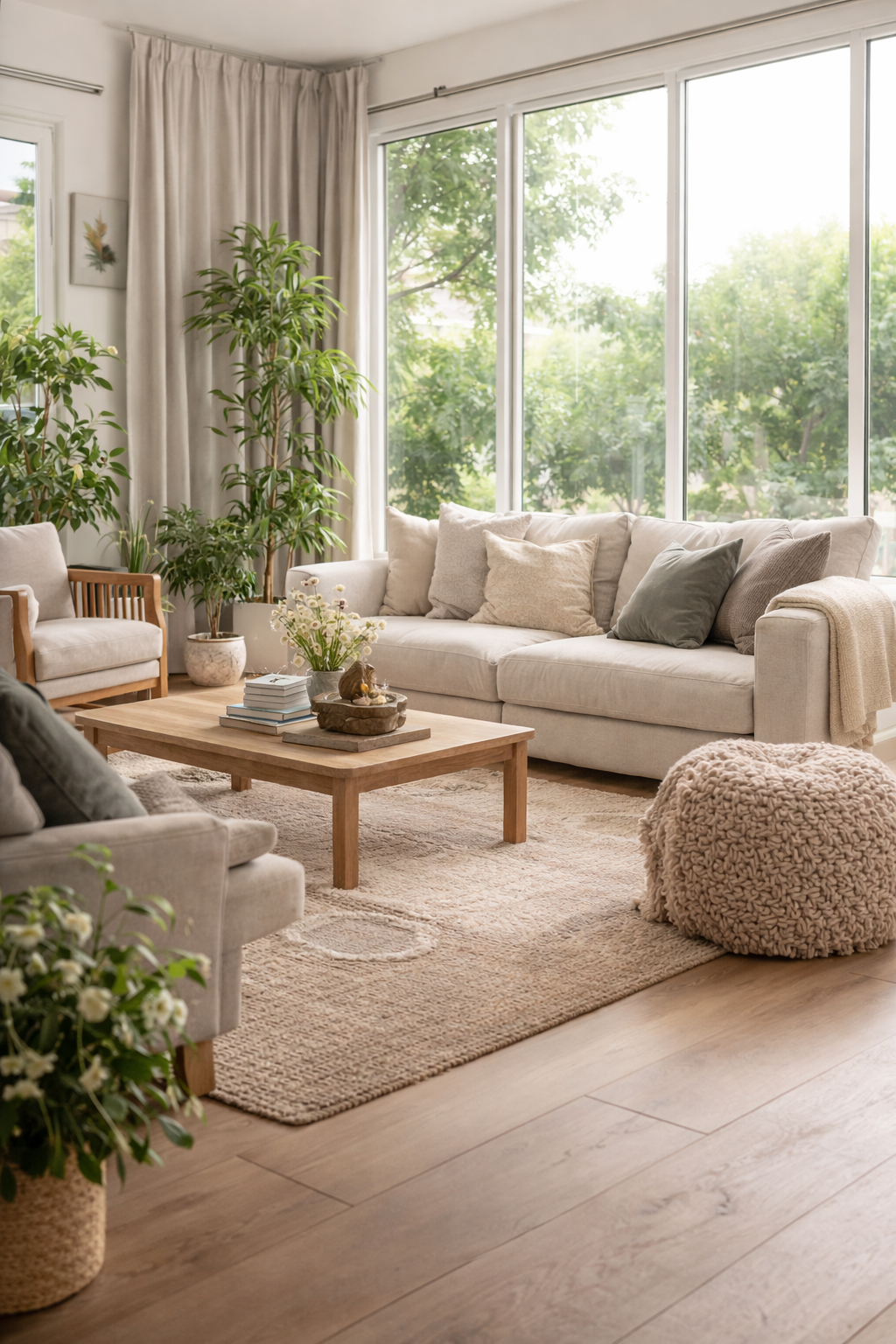
Natural materials absorb sound better than artificial ones.
How to Apply Psychoacoustics at Home
(This article focuses on home acoustics; workplace acoustics is more technical and tied to function, productivity and occupant satisfaction using the Speech Transmission Index, or STI, developed in 1971)
The most powerful intervention is absorption. Minimalism design, while clean and beautiful, is physiologically stressful for its lack of warmth and loud acoustics. Adding natural fiber rugs, upholstered furniture, linen drapery, fabric headboards, wall art with texture (i.e. canvas not glass), bookcase and cork or wood panels. Designers are already incorporating these natural elements in design.
Good acoustic design is often invisible because it feels natural. People only notice poor acoustics when something’s wrong.
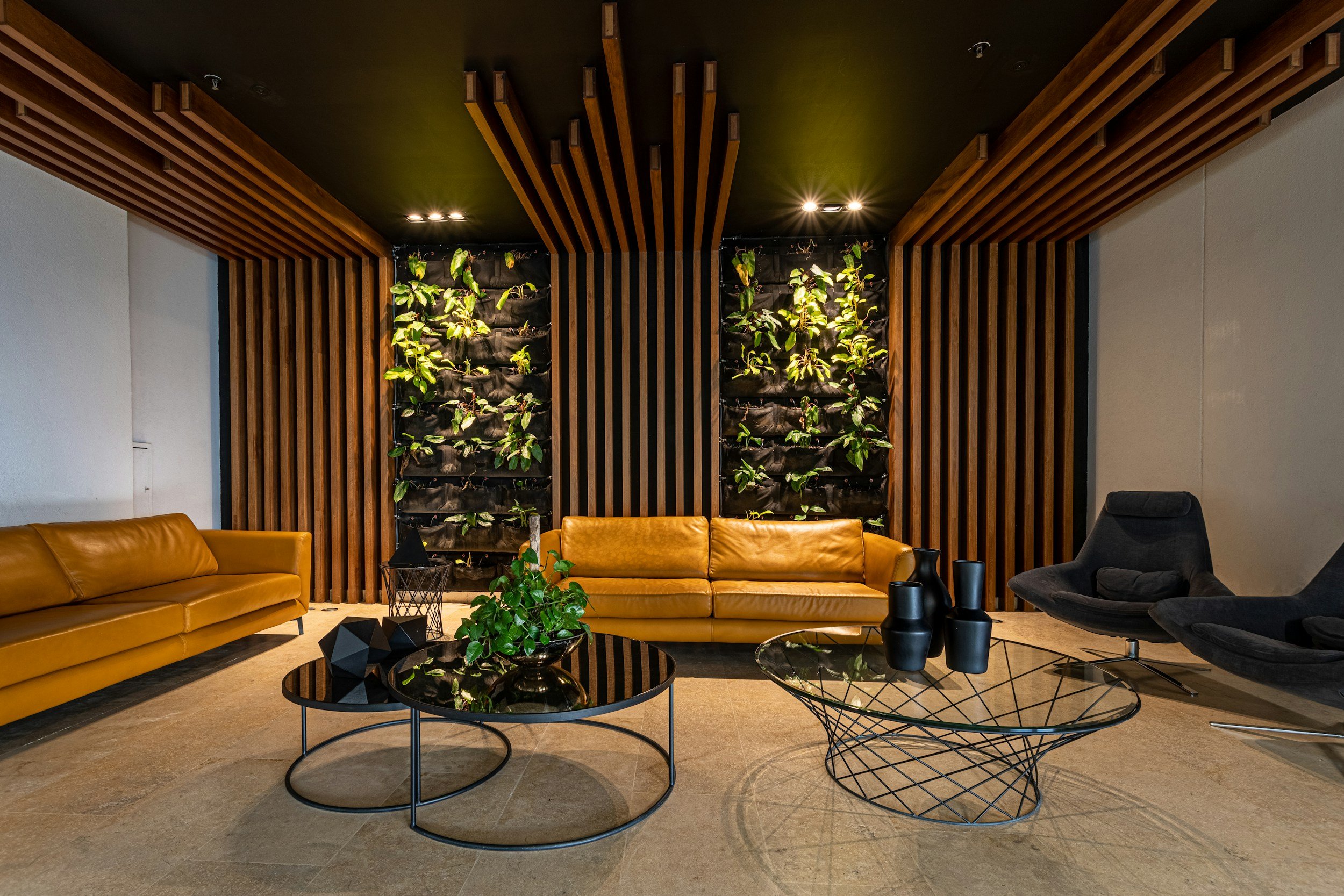


Eliminate Tonal Noise
Loud noise is defined as loud sound pressure while tonal noise is defined by a specific repeating frequency that can be annoying or irritating to the human ear and brain. Walk through your house at night and listen for high-pitched electrical noise, a transformer buzz or an appliance vibration through cabinets. Kitchens are a prime example.
Many clients describe better sleep simply after isolating a refrigerator compressor from the wall that sits on the other side of a bedroom.
Layer Gentle Sound
Healthy homes are rarely silent. By introducing controlled, organic sound, a home will have a feeling of calm and relaxation thus lowering blood pressure and heart rate. Small indoor fountains, ceiling fans at low speed, outdoor plantings that rustle, natural sound machines (not static white noise that masks sound) or gentle, soothing music coming from a quality sound system are examples of layered gentle sound.
Design for Acoustic Privacy
Open concept living, which has transformed home design for decades, can increase stress hormones because the brain never gets auditory boundaries. Avoid spending hours in an open-floor plan. Instead seek out smaller spaces for rest and relaxation. Incorporate pocket doors, curtains, room dividers that you can easily be added to a larger space. Alcoves, niches and hallway transitions offer acoustic boundaries into your space. Humans relax when they can hear but not be heard.
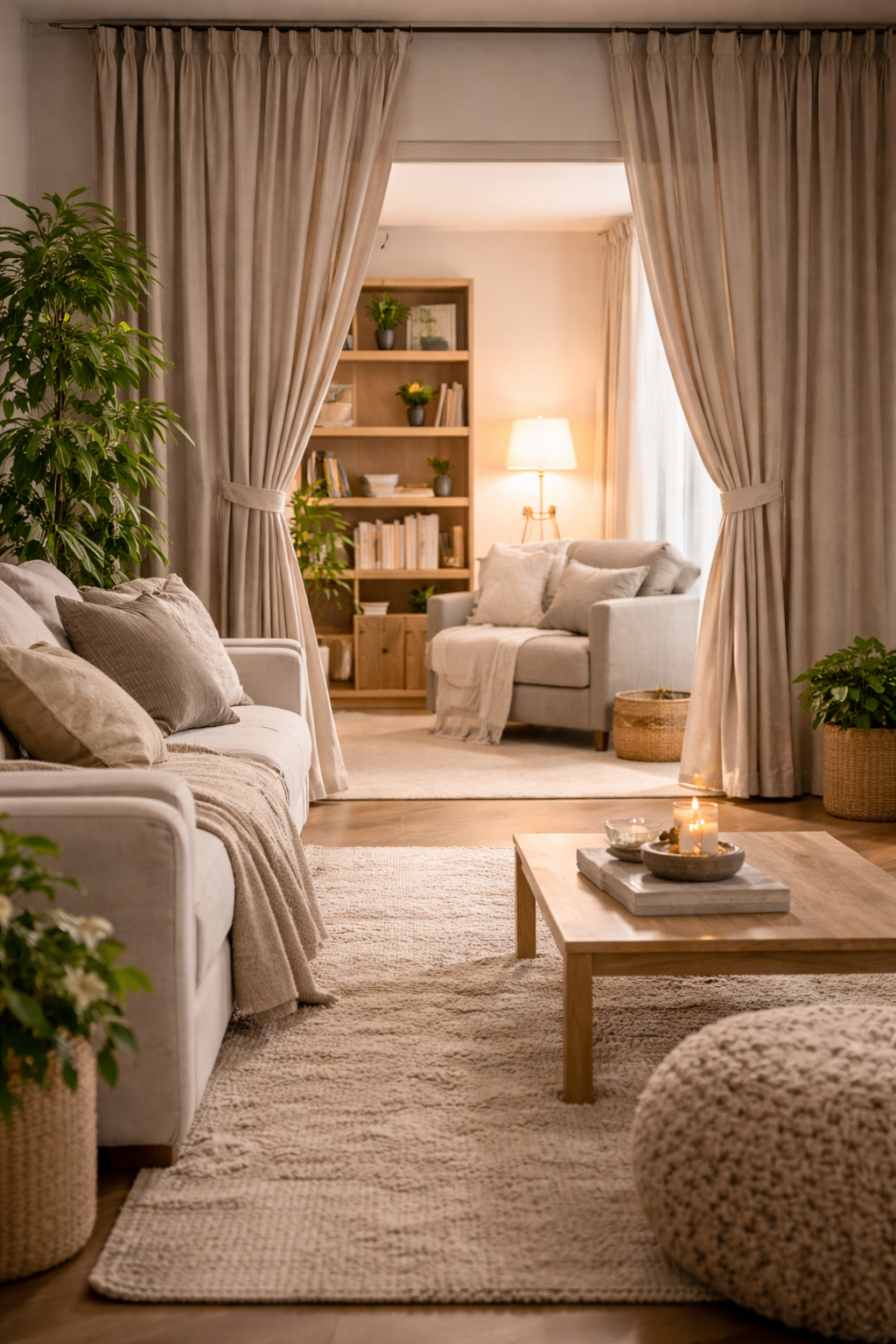
Simply adding curtains between room helps create privacy and more comfortable acoustics.
Design with Natural Materials
Natural materials such as wood, wool, cork, and linen absorb sound better than synthetic or hard surfaces. Avoid Luxury Vinyl Planks that manufacturers claim help with acoustics but do not absorb sound as well as wood or cork. The toxic materials in this type of flooring are not healthy or safe for your family or the planet.
Layering materials and objects can also help. A bookcase in a kitchen with cookbooks, small herbs or plants, is an example.
Kitchens Are The Culprit
Kitchens are actually one of the noisiest rooms in a house, and most modern kitchens unintentionally amplify sound because they are filled with hard, reflective materials. From a psychoacoustics perspective, a kitchen should soften and absorb sound so the room feels calm and conversation-friendly rather than loud and chaotic.
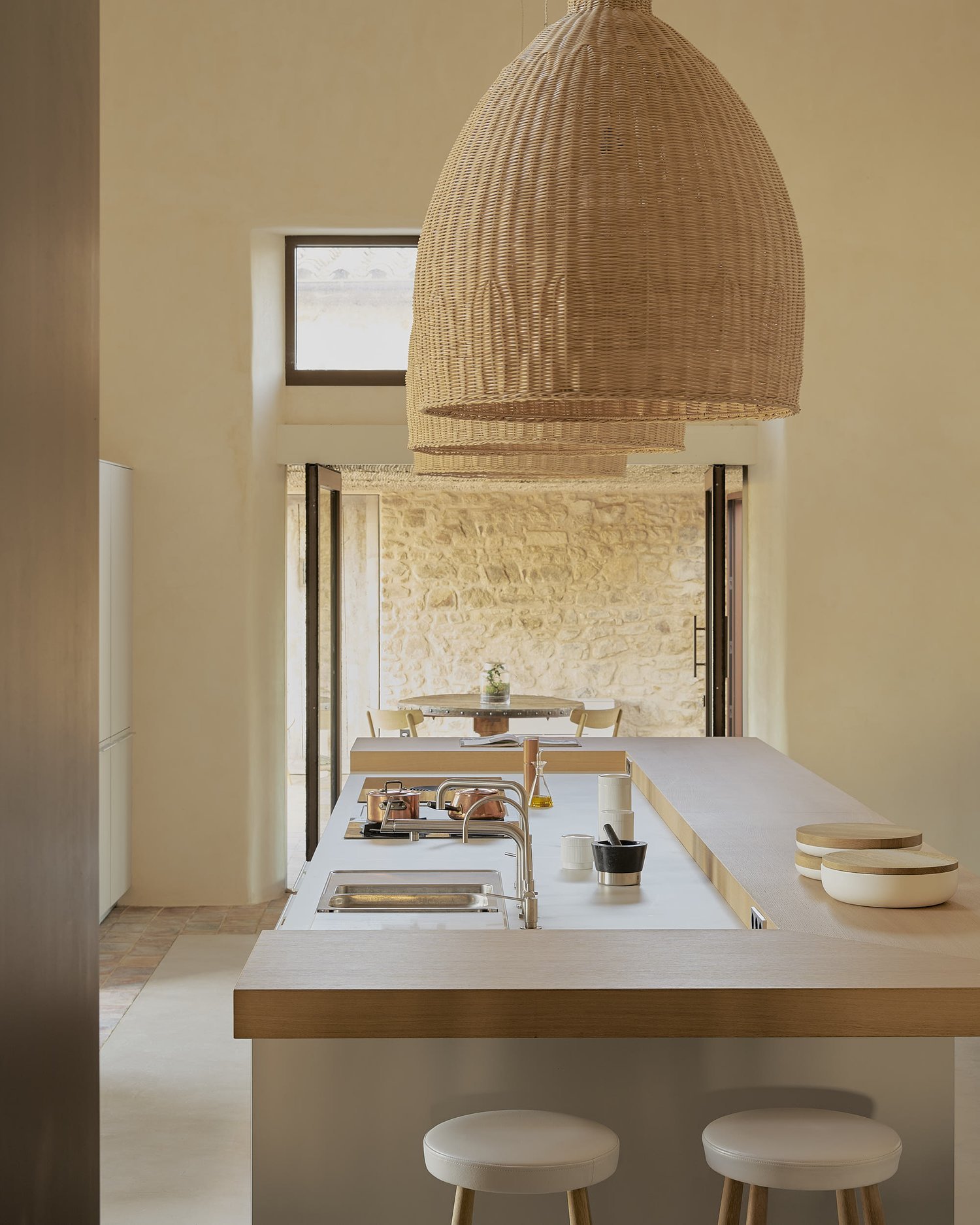
Reduce Ceiling-Echo by adding wooden beams, tongue-and-groove wood paneling, acoustic plaster, decorative acoustic panels or fabric pendant lights
Design with wood cabinetry instead of lacquer or high-gloss finishes.
Use Cork or wood flooring instead of large tile
Add upholstered bar stools
Decorate with fabric cushions on dining chairs
Throw down some natural fiber rugs or runners
Install natural window shades or blinds
Choose quieter appliances with low decibel ratings. Mechanical noise is one of the biggest contributors to kitchen stress.
Typical examples:
Quiet dishwashers (38–44 dB)
Refrigerators with inverter compressors
Induction cooktops instead of gas burners
Vent hoods rated for lower “sones” (perceived sound)
Even small reductions in appliance noise significantly improve psychoacoustic comfort.
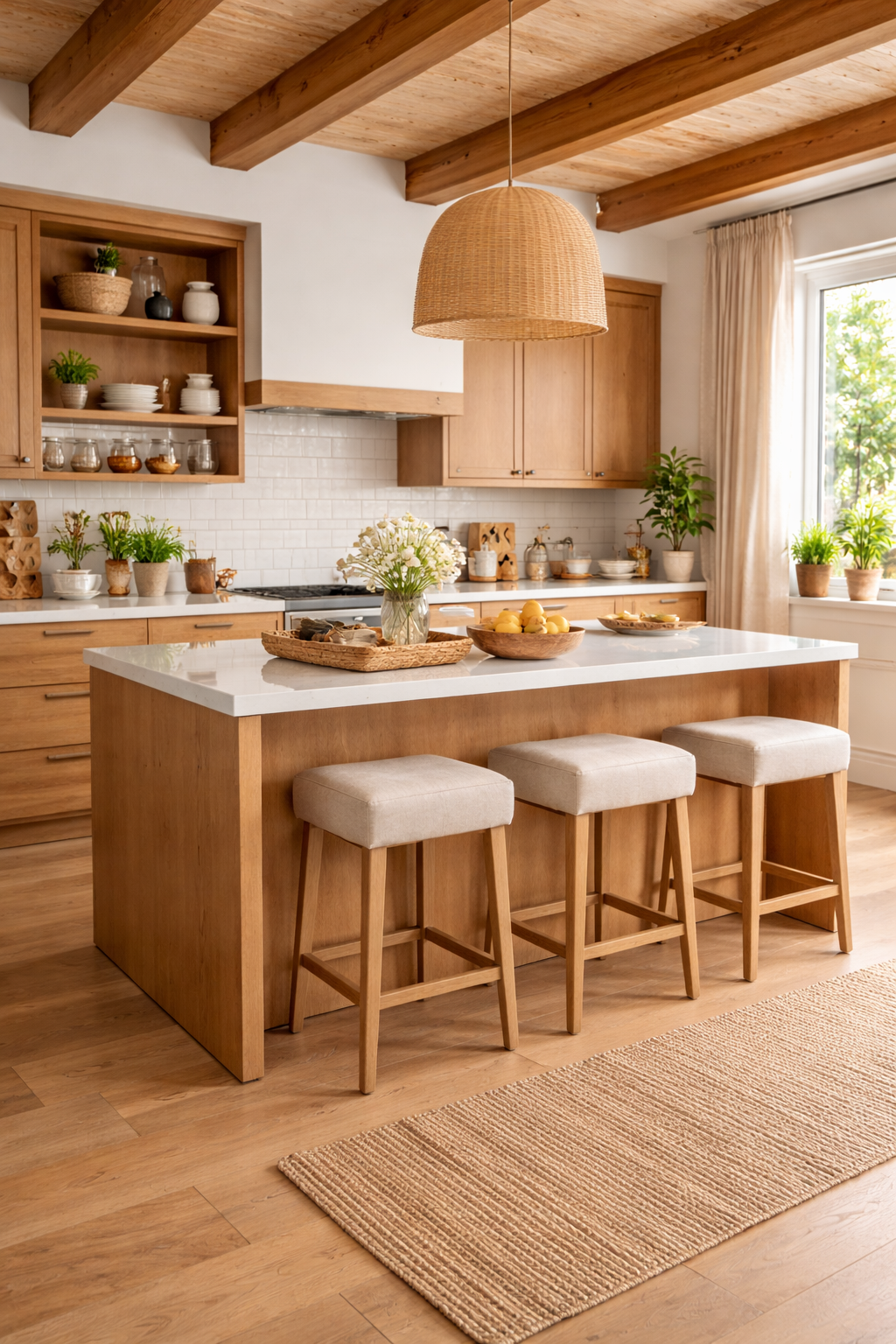
Natural materials in a kitchen can help with acoustic comfort.
The Future of Wellness Design
We have spent years focusing on what homes are made of to keep us healthier: air quality, materials and lighting that support our physical and emotional wellbeing. The next frontier is what our homes sound like - the acoustics, the textures of everyday noise, and the ways sound shapes comfort and calm. By following some of these tips, a healthy home will not only sound right, it will finally feel right.